Wadded white
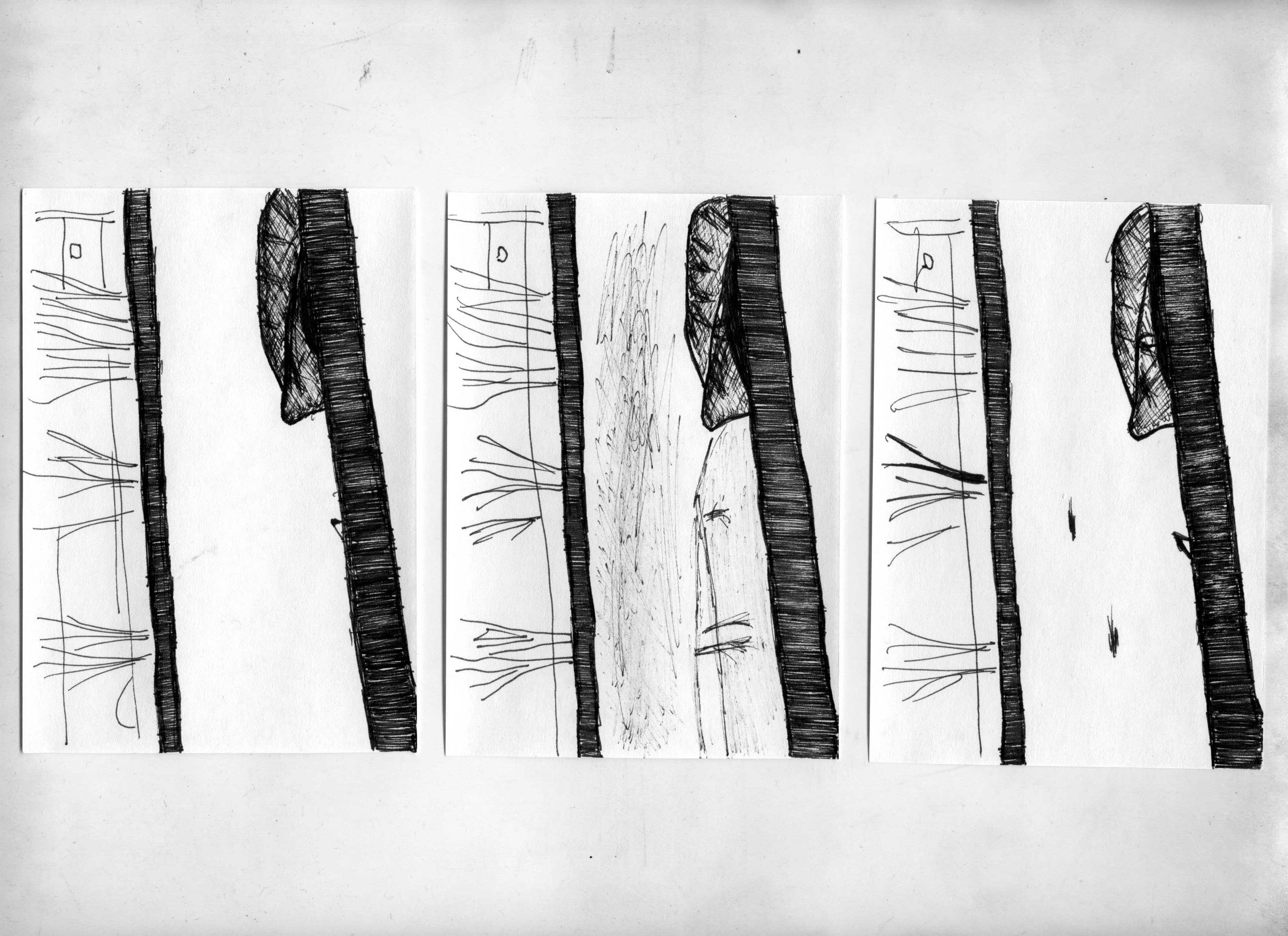
Wadded White / Ватный белый began as a graphic and poetic book project about Arkhangelsk, my native city. In the project, I worked with crime reports from Arkhangelsk. During a trip to the city in February, I was struck by the number of crimes, suicides, and everyday catastrophes described in an almost mechanically dry official language. Many of these stories were connected with debt, domestic violence, social exhaustion, and economic vulnerability. I was interested in the formulaic tone of these reports — phrases such as “Следствием установлено…” — and in the strange gap between the violence of the events and the neutral bureaucratic language used to describe them.
My method was to read local crime chronicles, find places in Arkhangelsk that could correspond to these reports, photograph them, and then make drawings based on these photographs. I combined these drawings with fragments of newspaper and police language, removing names, addresses, dates, and identifying details. What remained was a kind of purified syntax of catastrophe: anonymous, repetitive, almost empty.
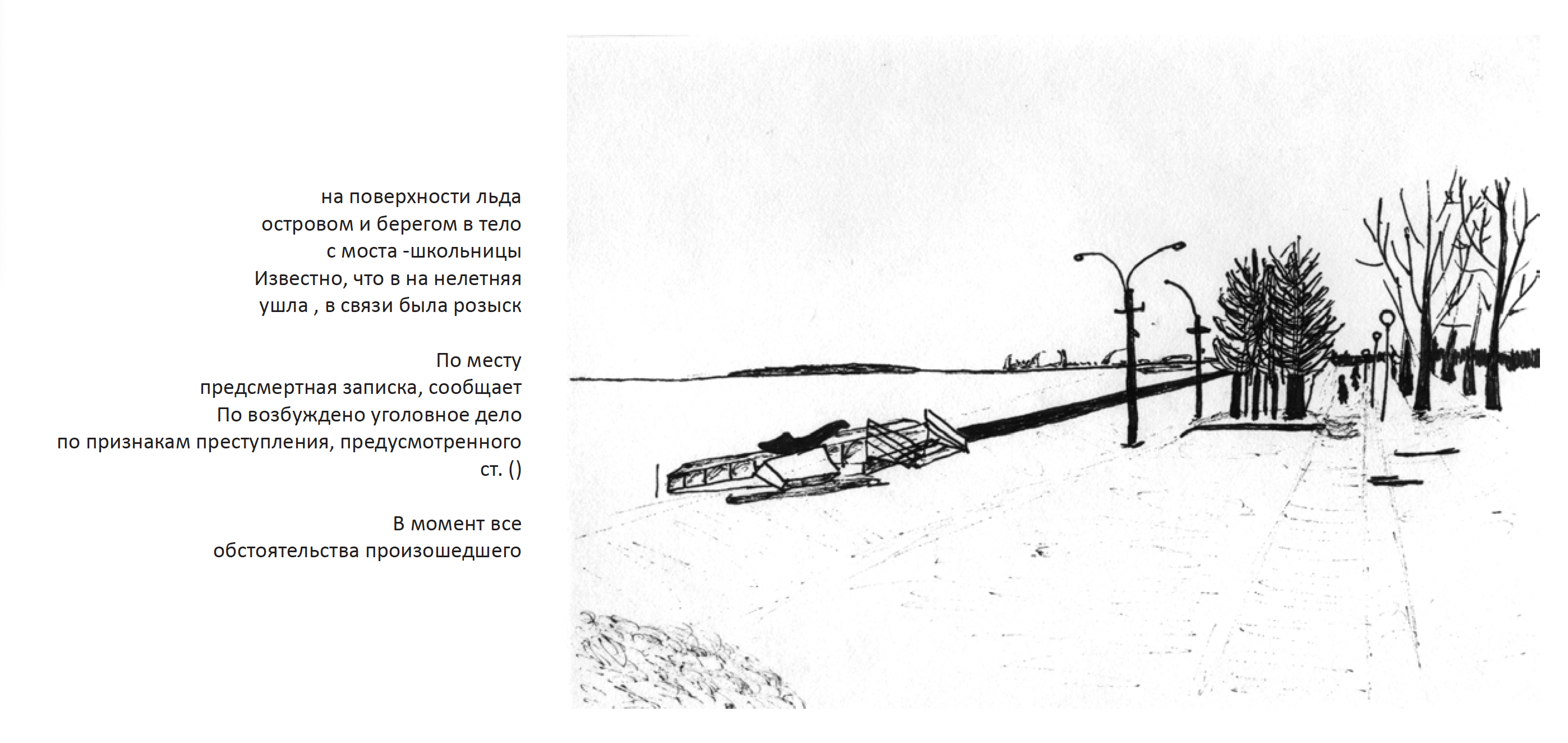
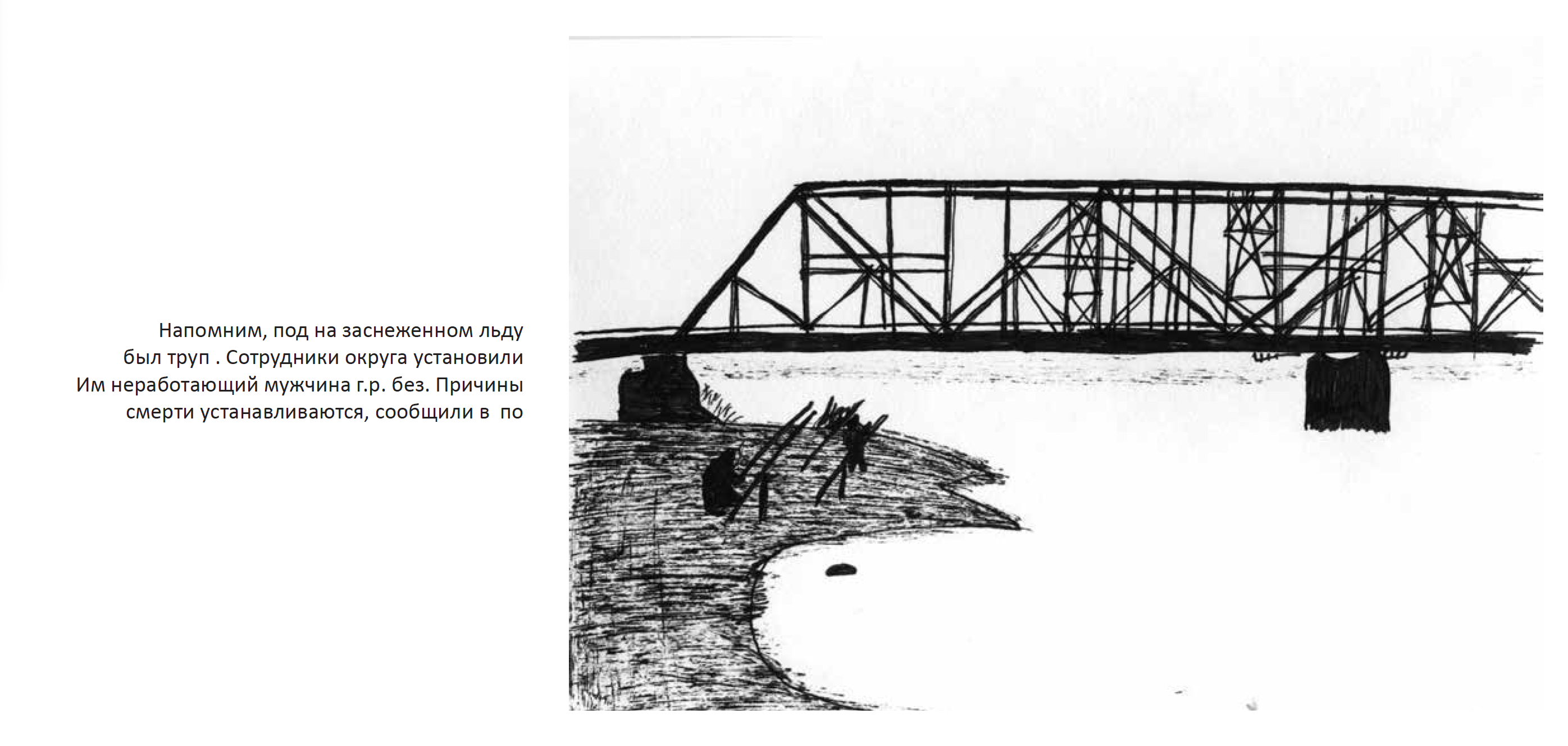
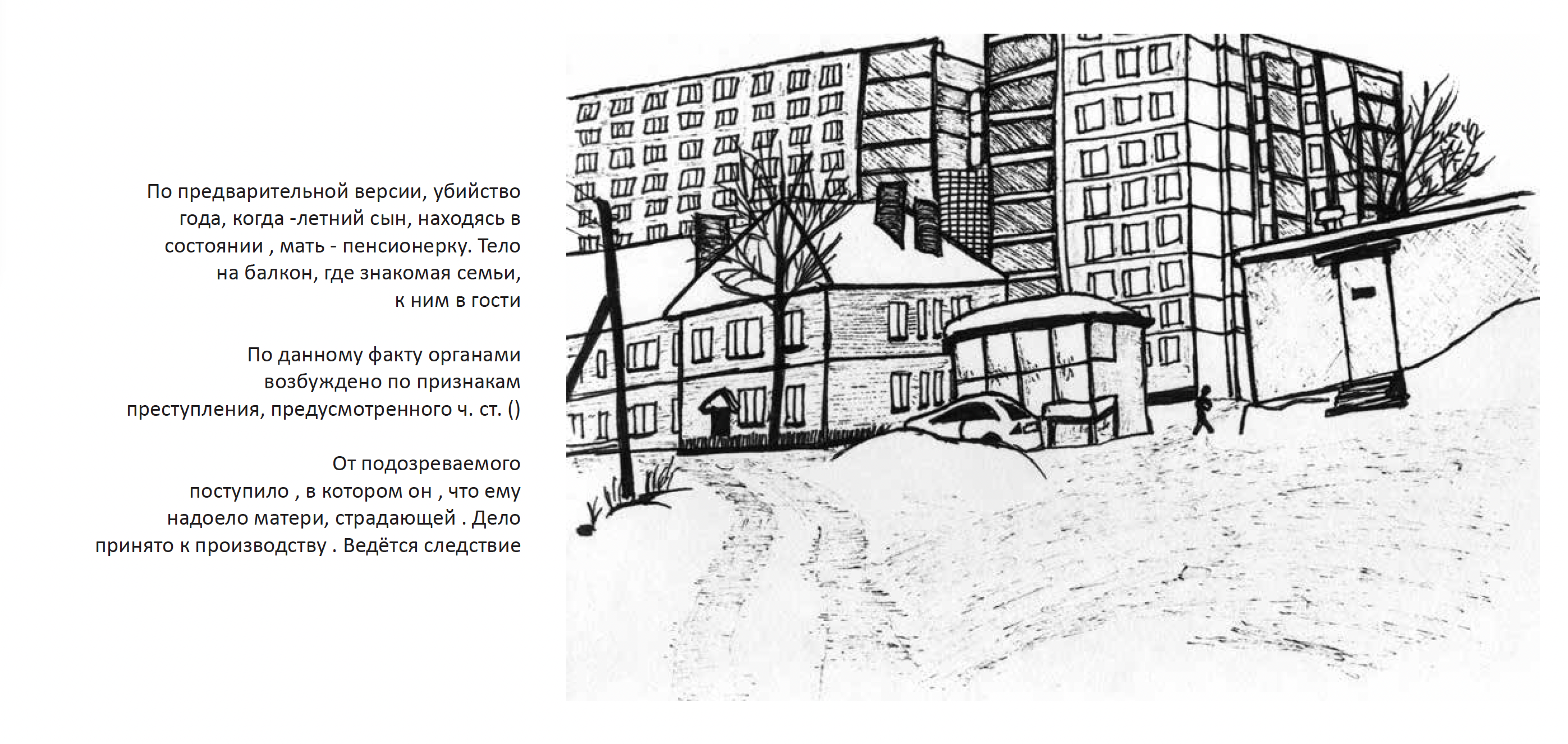
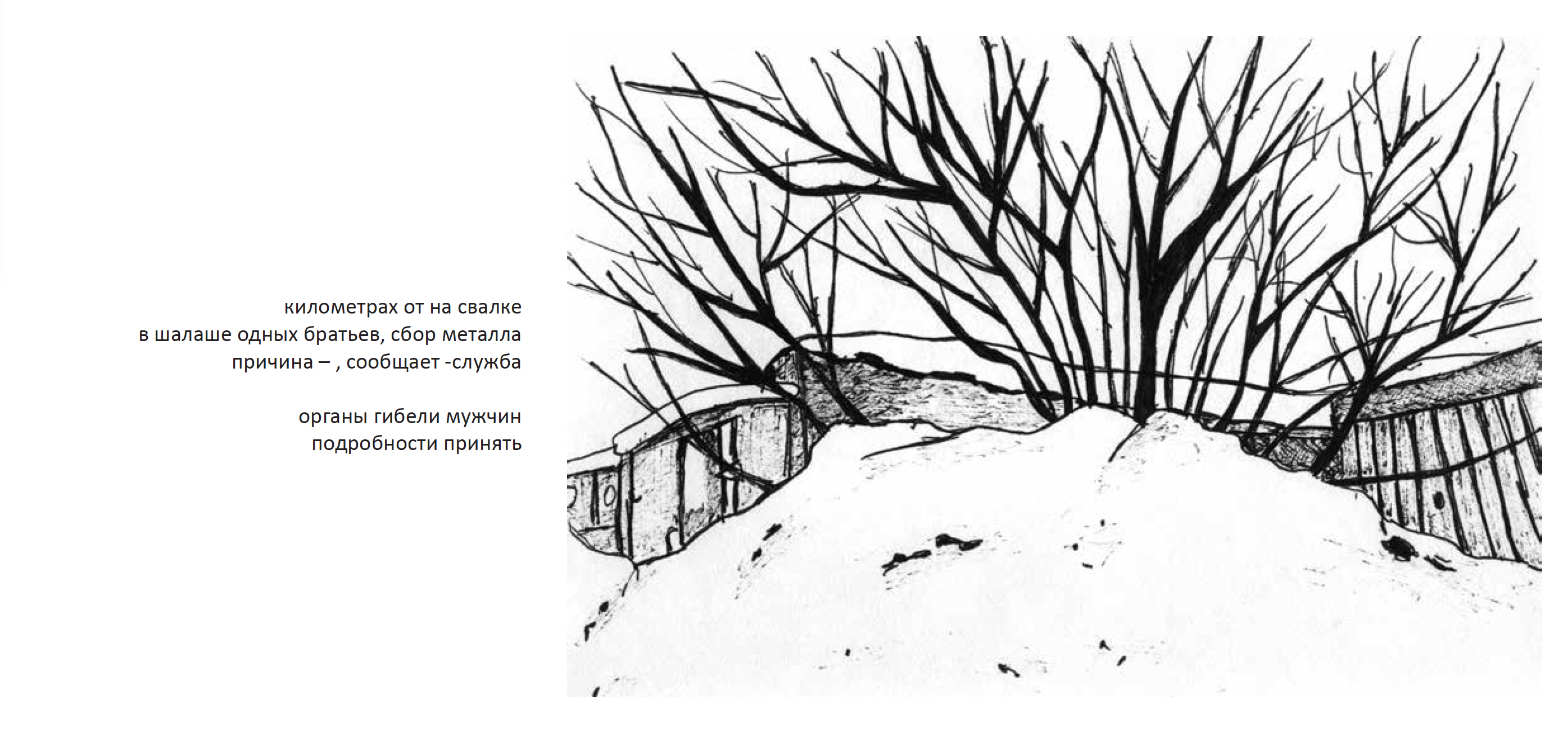
The white background in the book became an important part of the work. It was not simply empty space, but a field of disappearance, forgetting, and erasure. In a later review, Egor Sofronov connected Wadded White with my broader use of the white background as a space of oblivion, describing the project as a poetic and graphic book in which the ruined landscapes of Arkhangelsk are placed together with poetry made from tabloid headlines about victims of financial bondage and domestic violence.
After emigration, the project unexpectedly gained a second life. I returned to the same principle in Germany and created a new graphic-poetic collection based on criminal news from Leipzig. In this later work Nichts passiert, the method of Wadded White was displaced into another language, another city, and another administrative reality. What struck me in Leipzig was the fact that street violence seemed far less visible, while domestic violence appeared to flourish silently, hidden firmly behind the walls of private homes. Again, I worked with the anonymous language of police and media reports, with omissions, empty spaces, fragments of syntax, and the visual tension between everyday urban places and the violence that briefly appears in official language before disappearing back into routine.
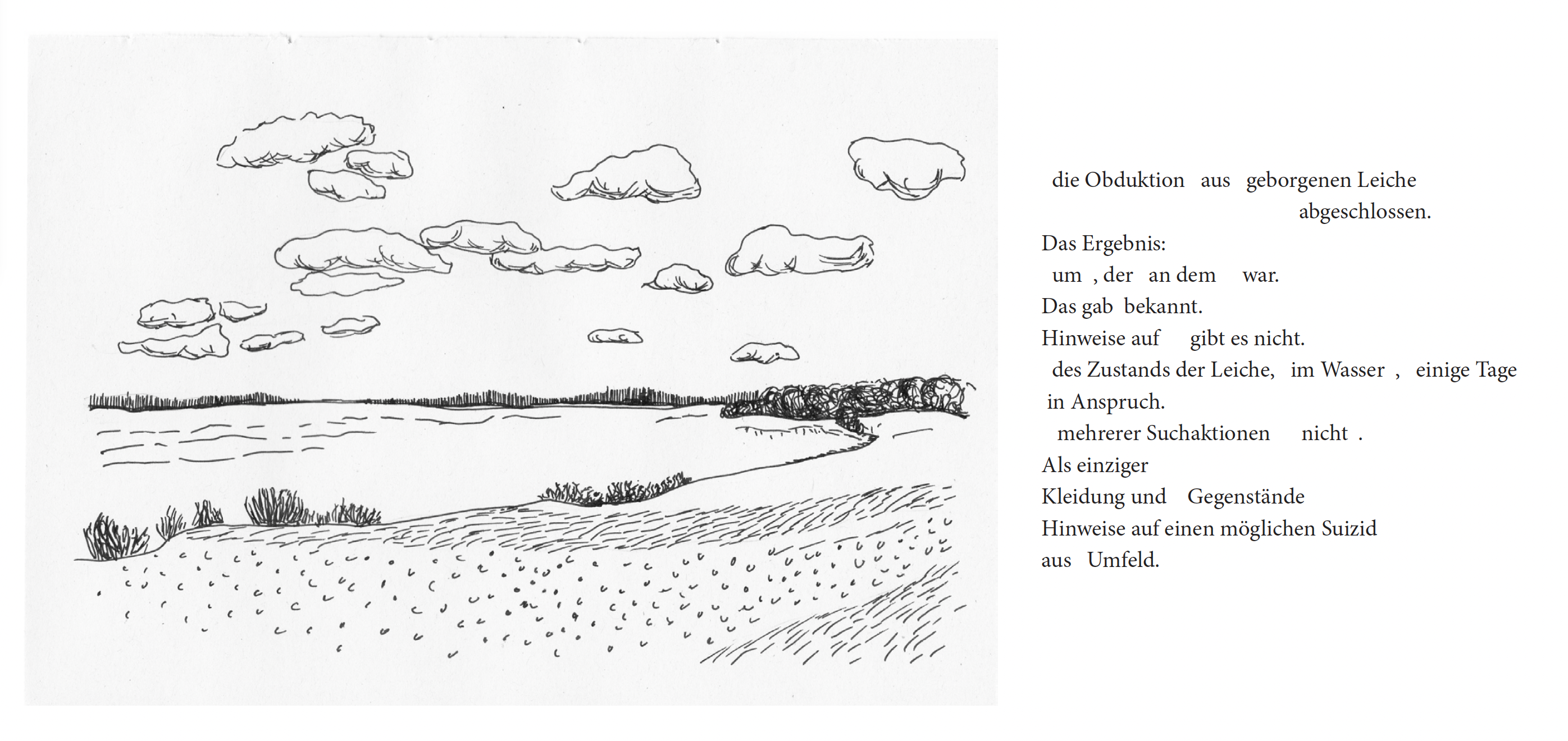
This continuation allowed me to see Wadded White not only as a project about Arkhangelsk, but also as a method: a way of reading the city through minor incidents, official formulations, erased identities, and the fragile border between what happened and what is allowed to remain visible.
Editions
Ватный белый, 2014. PDF
Wadded white, 2015. Translation by Jonathan Brooks Platt. PDF
Nichts passiert, 2025. Read online