Dead care
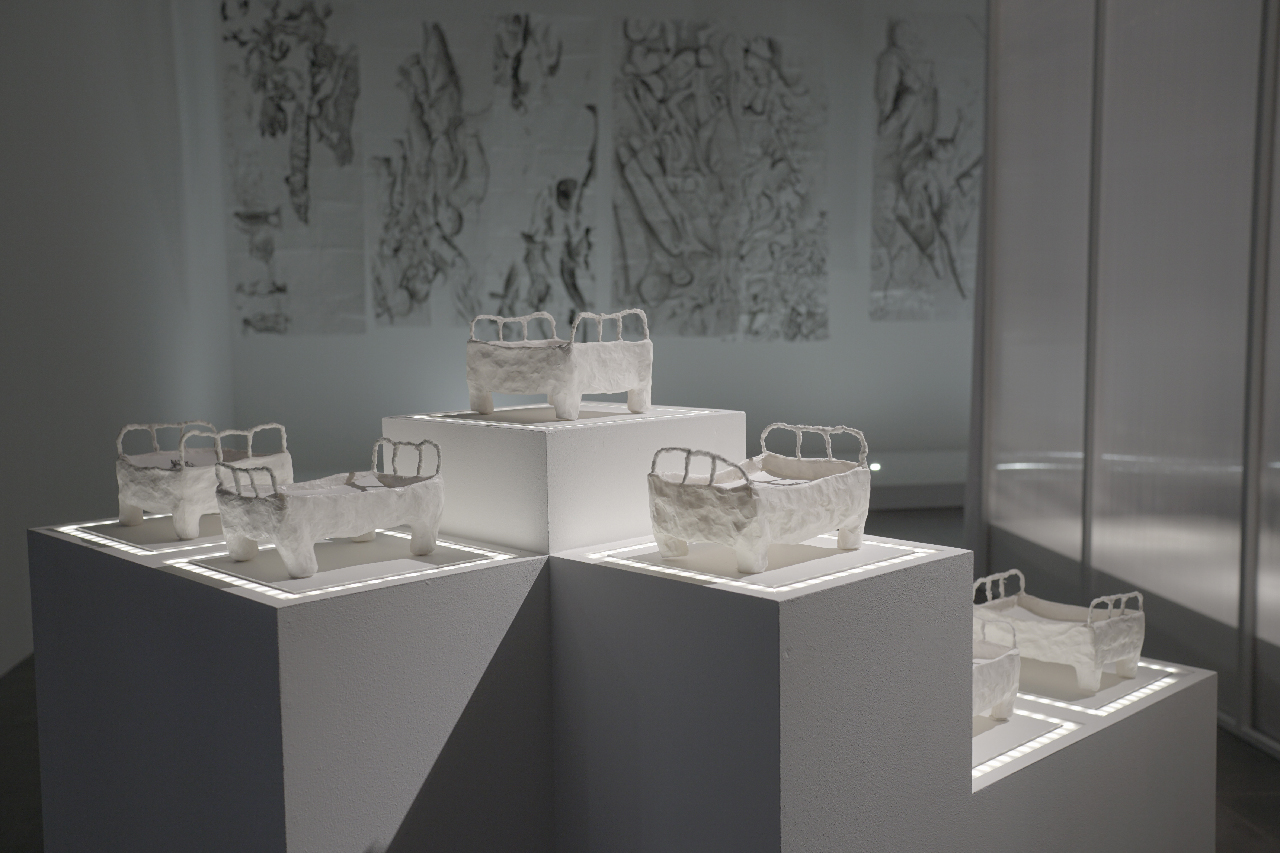
Dead Care is a long-term project about memory, care, and the unsettled dead. It began in 2015 as a small series of drawings titled Bodies. At that time, I was working with historical photographs of wars, repressions, and mass violence, and I was struck by the unbearable realization of how many people remain lying in mass graves — unnamed, unburied, absorbed into collective historical images.
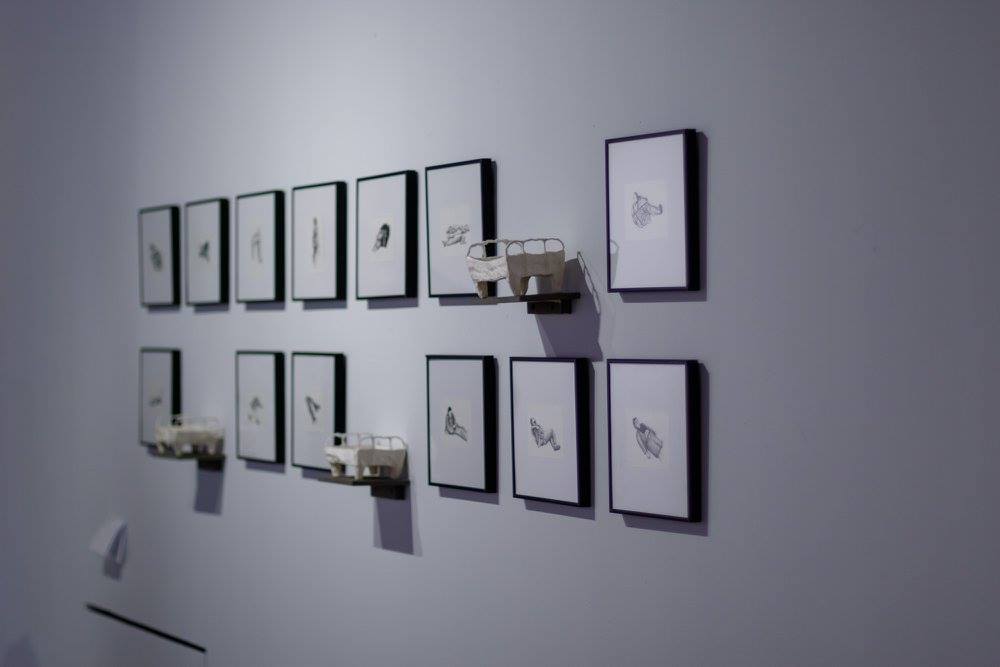
I started to draw small dead bodies by hand, taking them out of these mass images one by one. The gesture was simple, almost impossible: to separate a body from the crowd, from the archive, from the historical photograph, from the anonymity of catastrophe. These drawings were not portraits. They were attempts to return a minimum of attention to bodies that had been turned into evidence, statistics, or background material of history.
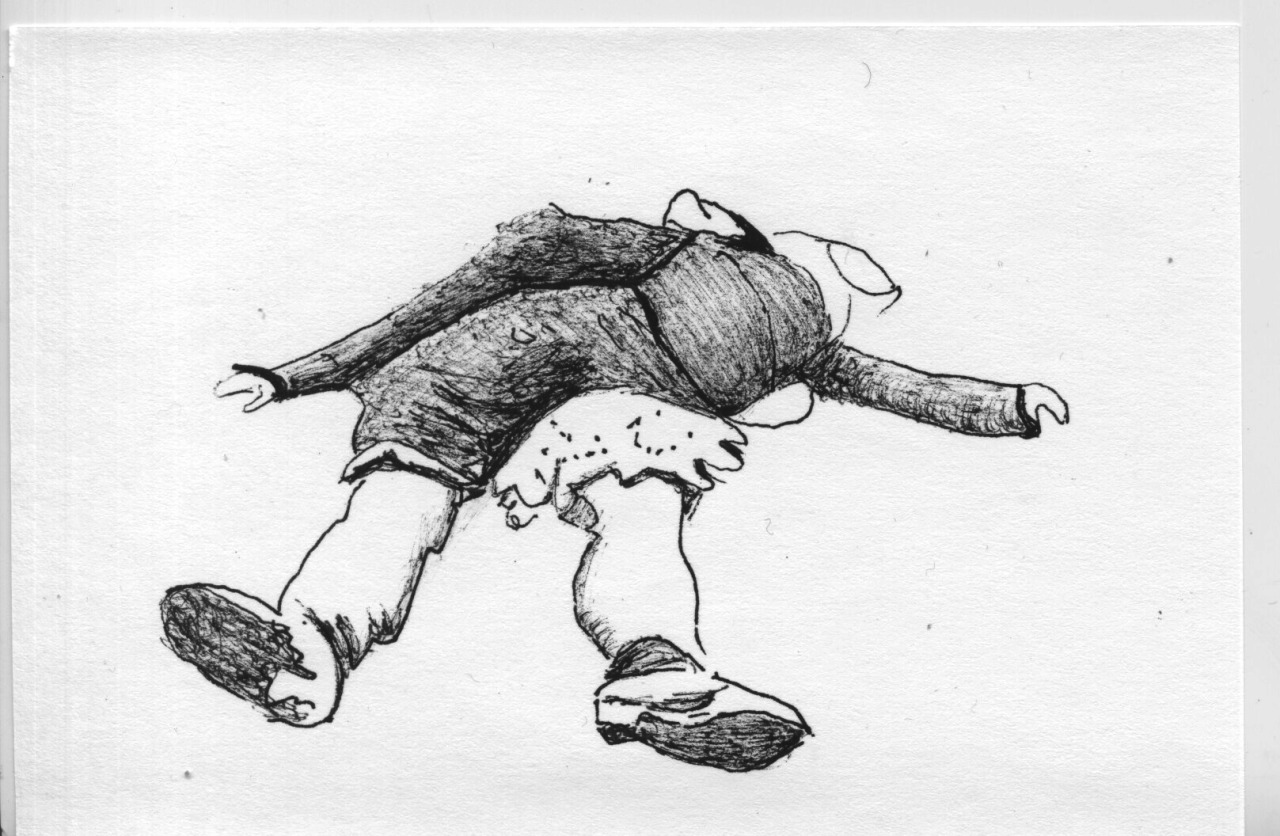
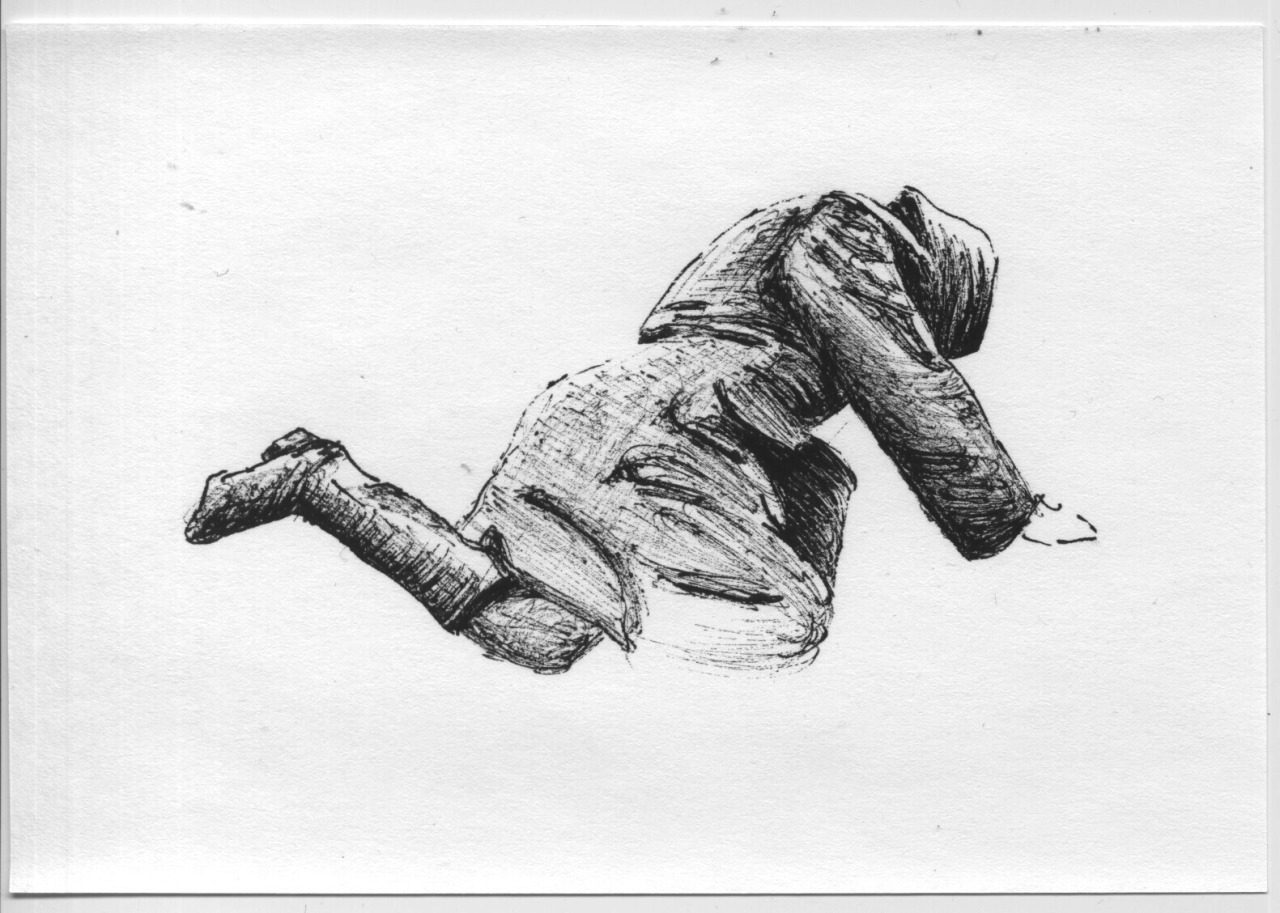
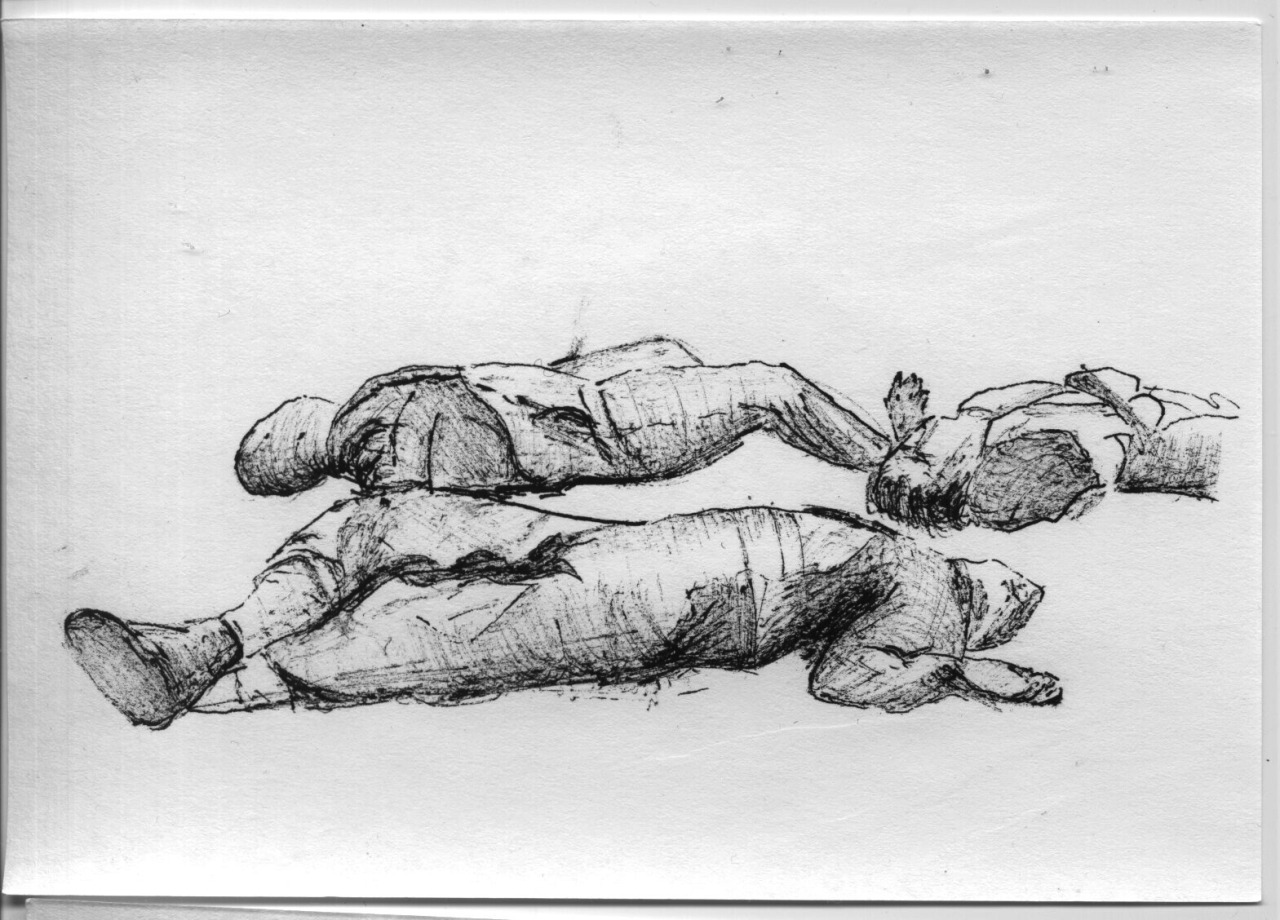
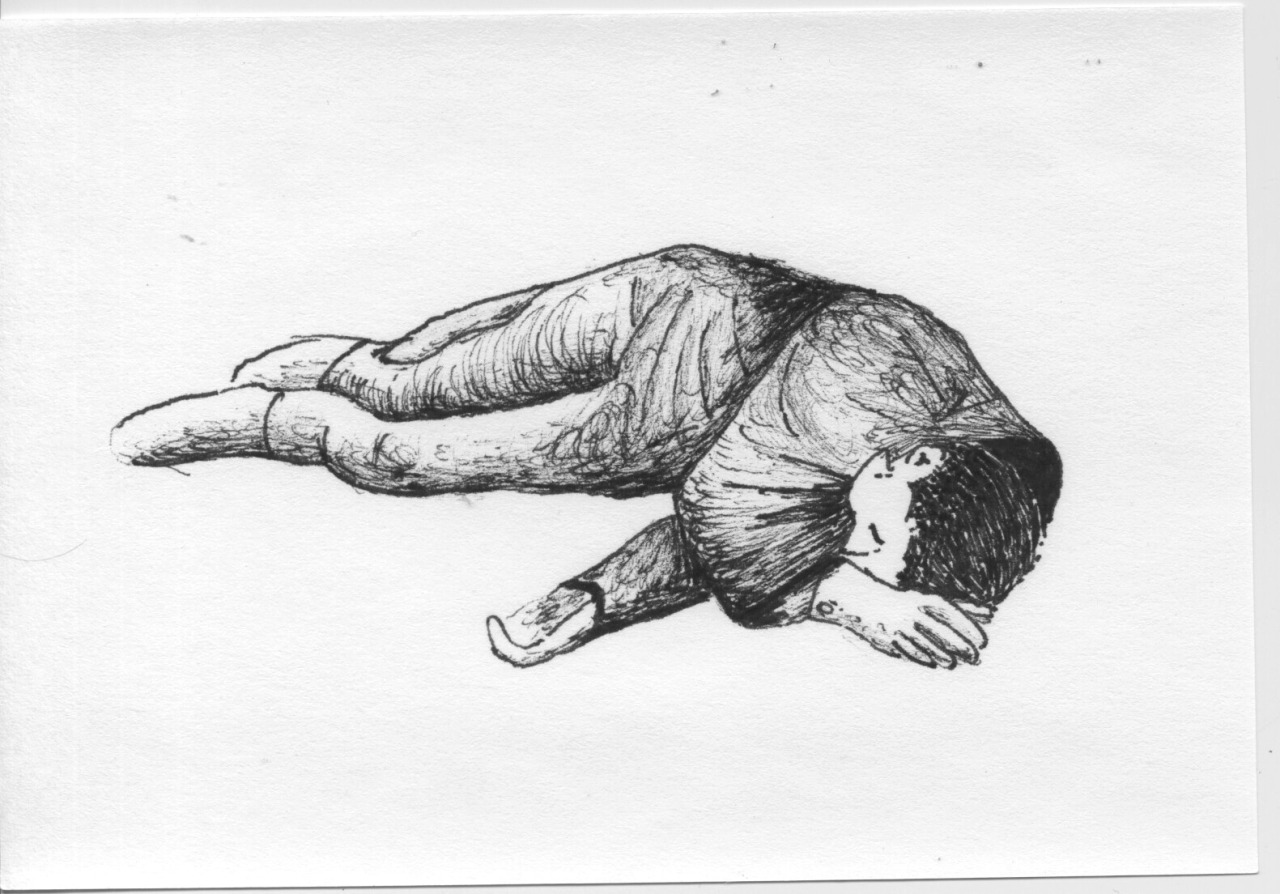
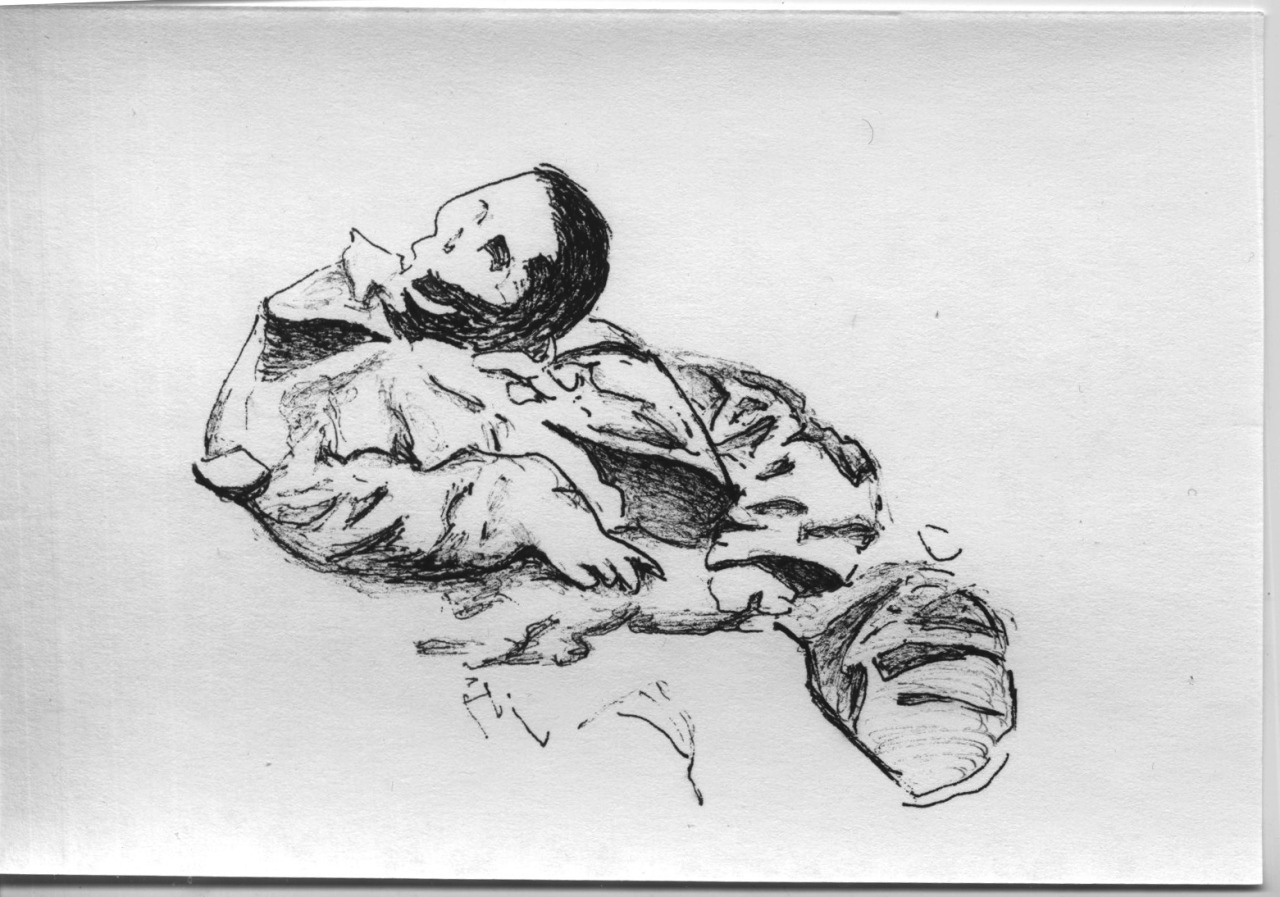
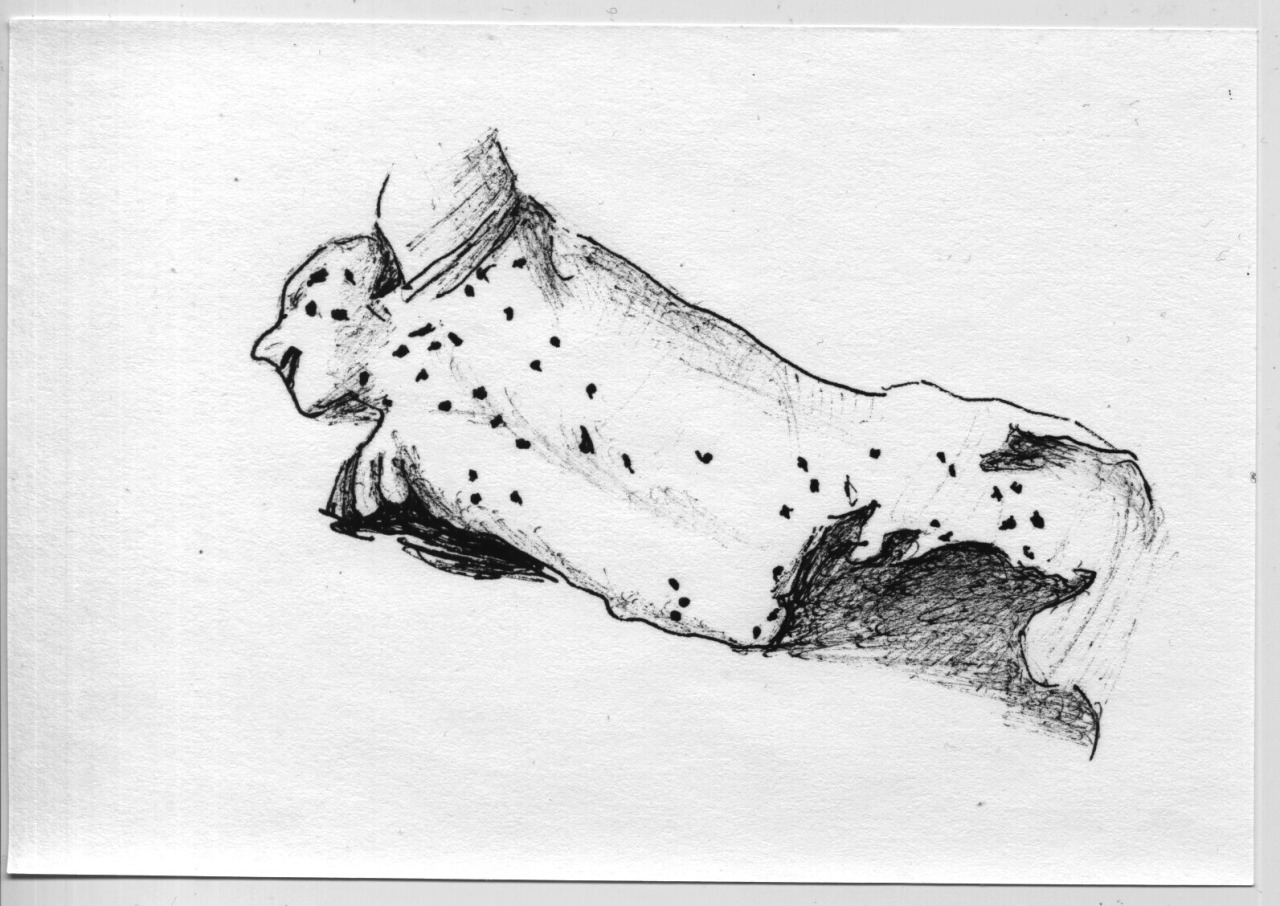
Corpses. gel pen, paper 10x13 cm, 2015-2016.
The series Bodies was first shown in 2016 at the exhibition The Politics of Fragility in Moscow. During that exhibition, the next part of the project appeared: the idea to make a separate small bed for each body, a papier-mâché bed in which it could finally rest. This gesture shifted the project from looking and witnessing toward care. The body was no longer only extracted from the image. It was given a place.
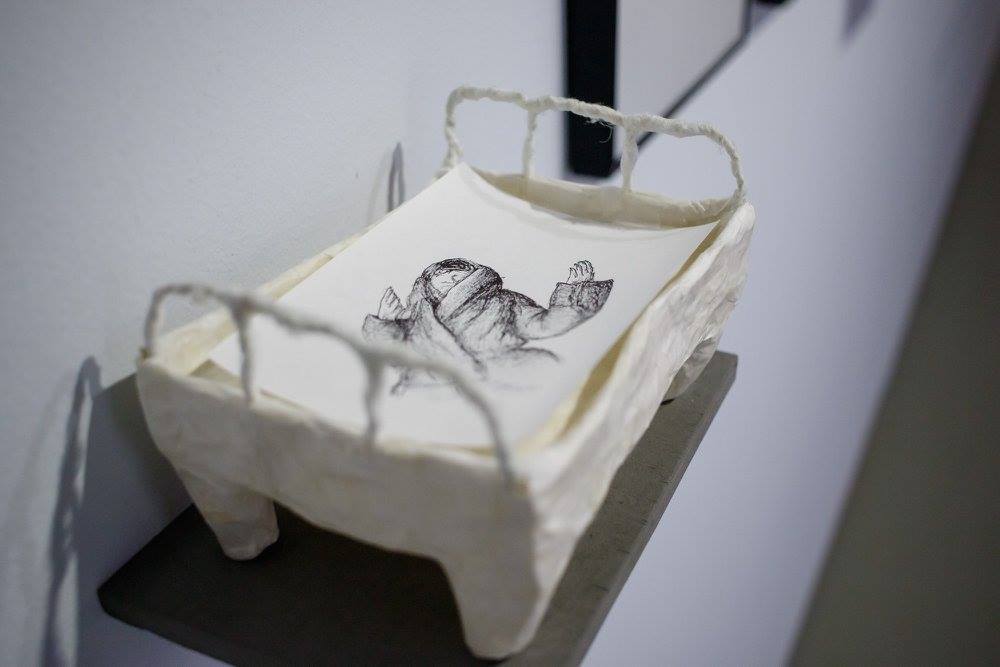
For my solo exhibition Easy in Moscow in 2018, I created a whole pedestal made of these small beds. Around the same time, other related works entered the project: the research on military technology Lost Machine and the series Battle Scenes. Together, these elements formed a broader field of work with historical memory: bodies, machines, battlefields, graves, beds, shelters, and the fragile rituals through which the past can be touched.
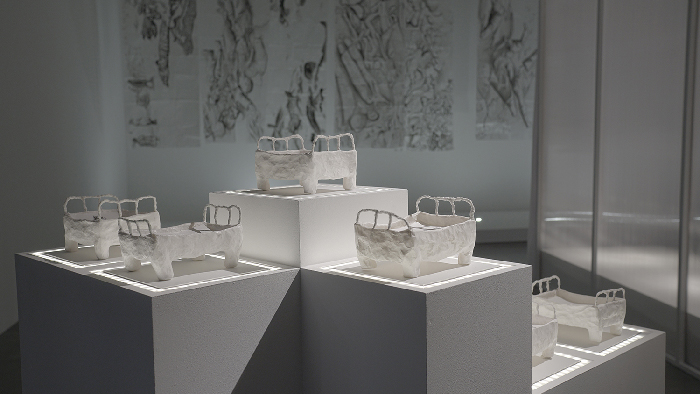
The culmination of this process was the solo exhibition Dead Care at BOA in Oslo in 2020. The exhibition brought together different stages of the project across several rooms. It included drawings made during the period of self-isolation in 2020, handmade paper sculptures, beds, tomb-like structures, and figures that I called the Guardians of the Dead — human and animal bodies wearing early prototypes of gas masks, based on archival images from the First World War.
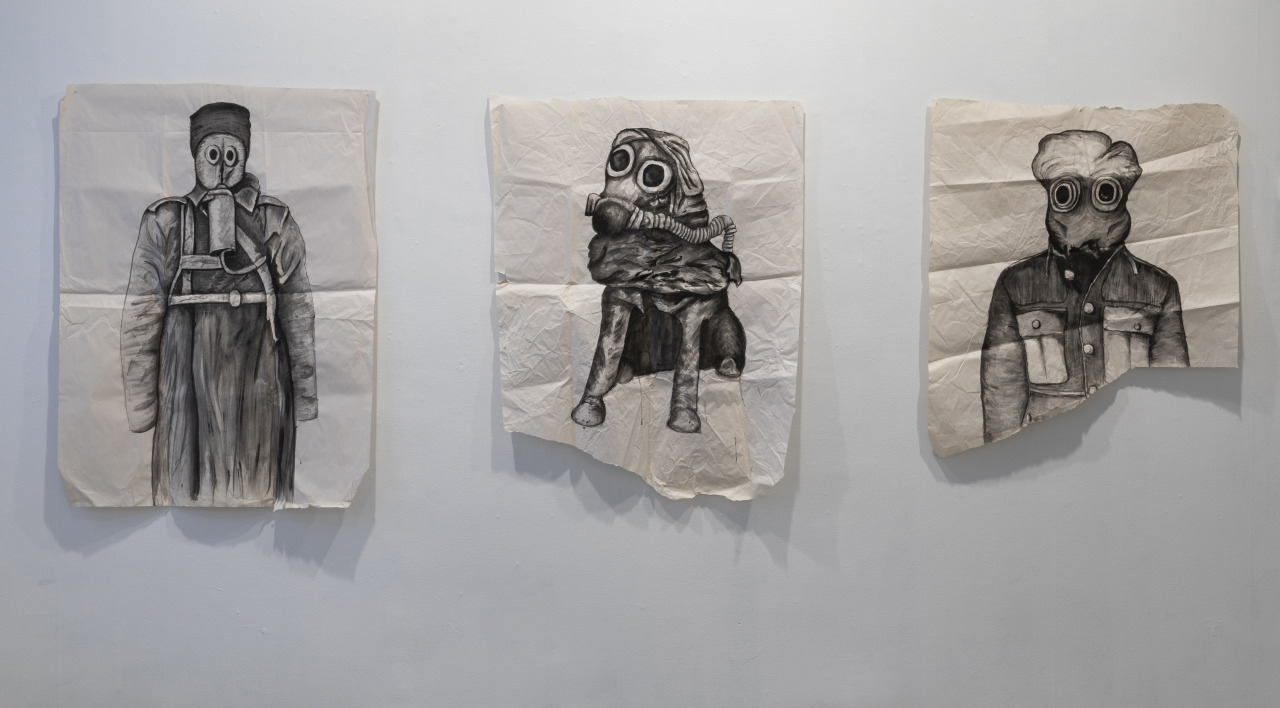
The Guardians stand at the threshold between protection and helplessness. Their masks suggest survival, but also transform them into strange mourning creatures. They belong to a world in which air itself has become dangerous, and technology enters the body through fear, breath, and death. They accompany the dead as witnesses, fragile keepers, and impossible protectors.
The sculptural part of Dead Care imagines a temporary shelter for those who were denied burial, individuality, and rest. Handmade paper beds and cradles create a quiet space where the dead can be separated from the anonymous collective grave. Here they are no longer a mass, no longer evidence, no longer a number. Each body is imagined as having its own bed, its own place, its own rest.
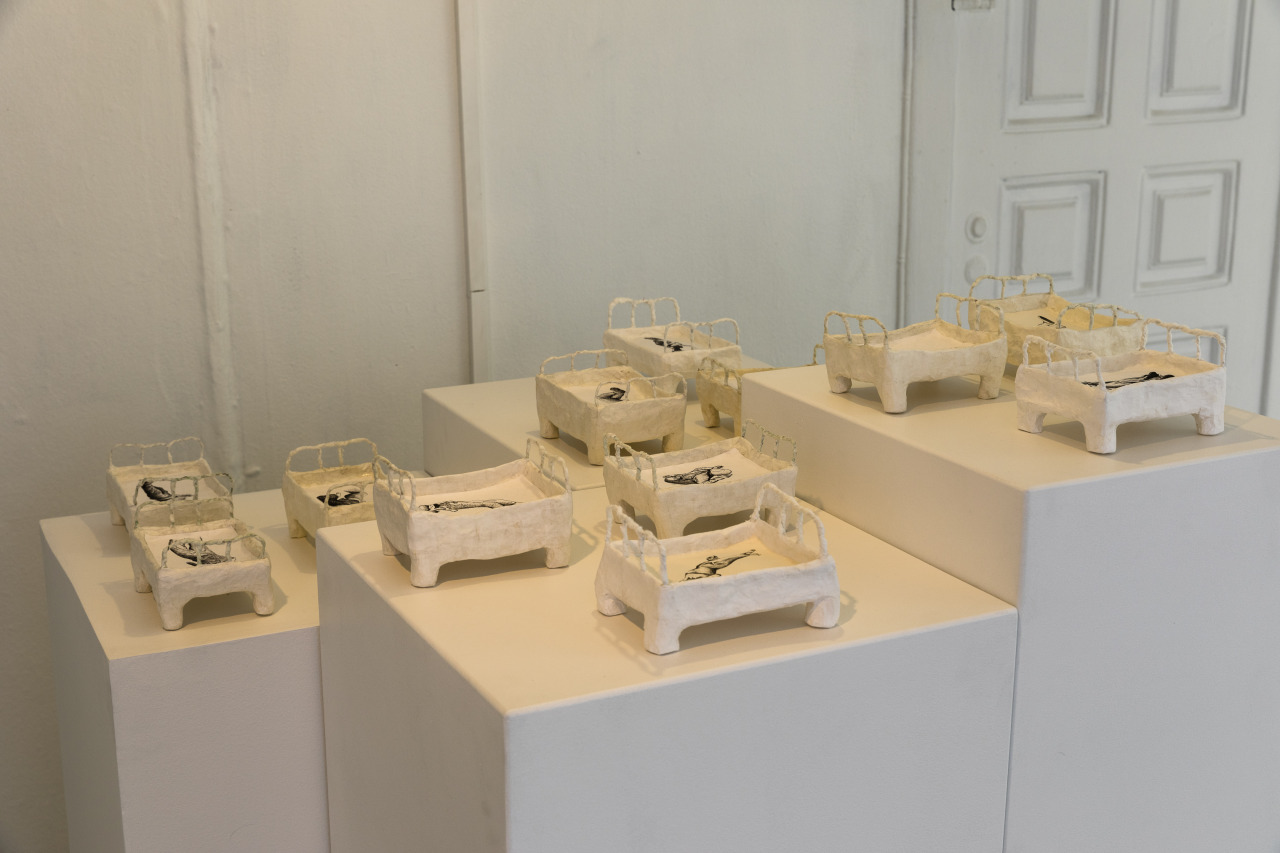
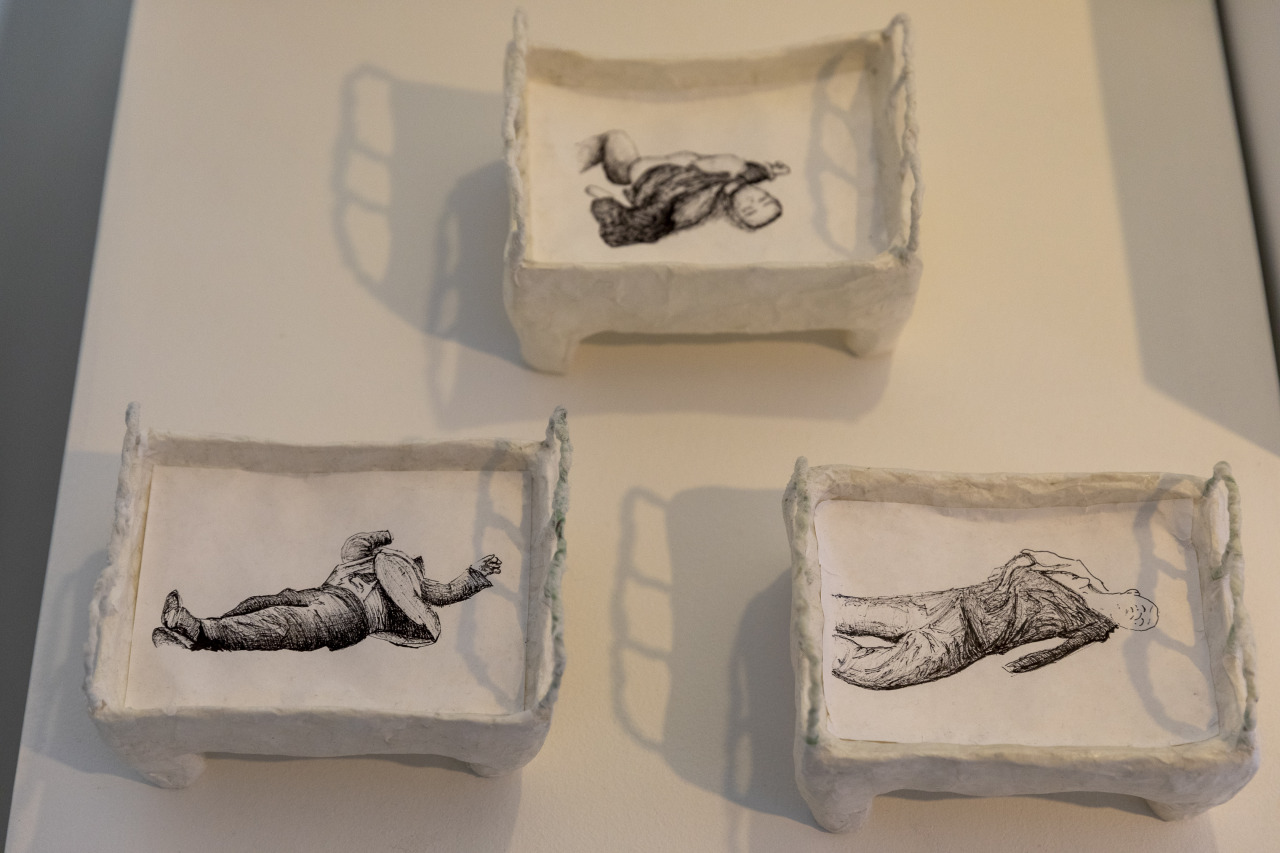
The use of paper is important. It is connected to archives, documents, bureaucratic records, letters, and historical evidence, but also to fragility, softness, touch, and decay. The beds are not monuments. They are unstable, vulnerable, almost unable to protect anyone. Their fragility is part of the project: memory is not fixed once and for all. It has to be held, repaired, and cared for repeatedly.
A frieze of dancing skeletons refers to the late medieval motif of the Danse Macabre, where death leads all people into the same dance. In Dead Care, this motif becomes a form of strange consolation. The skeletons are not only terrifying figures. They are companions, performers, restless souls who have finally entered a space where they can move, sleep, and be seen.
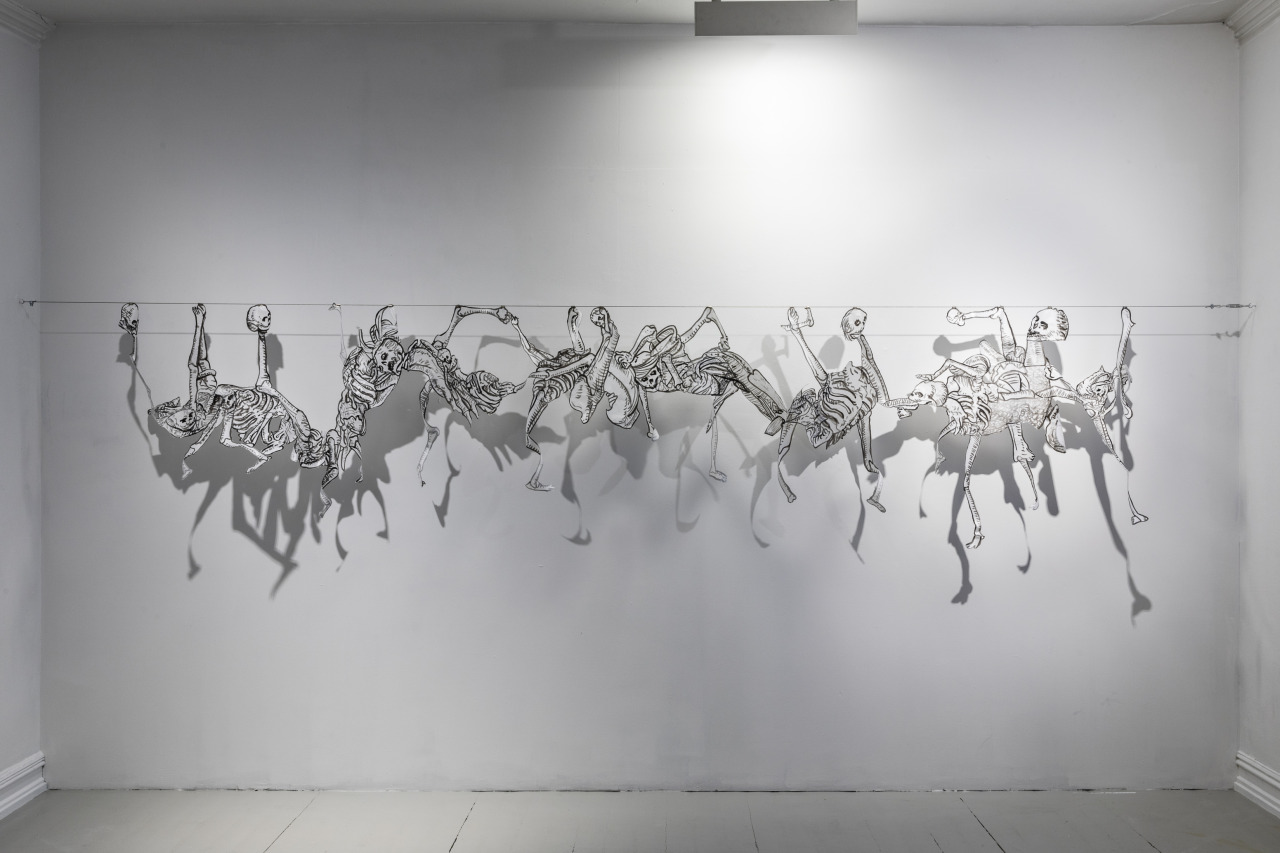
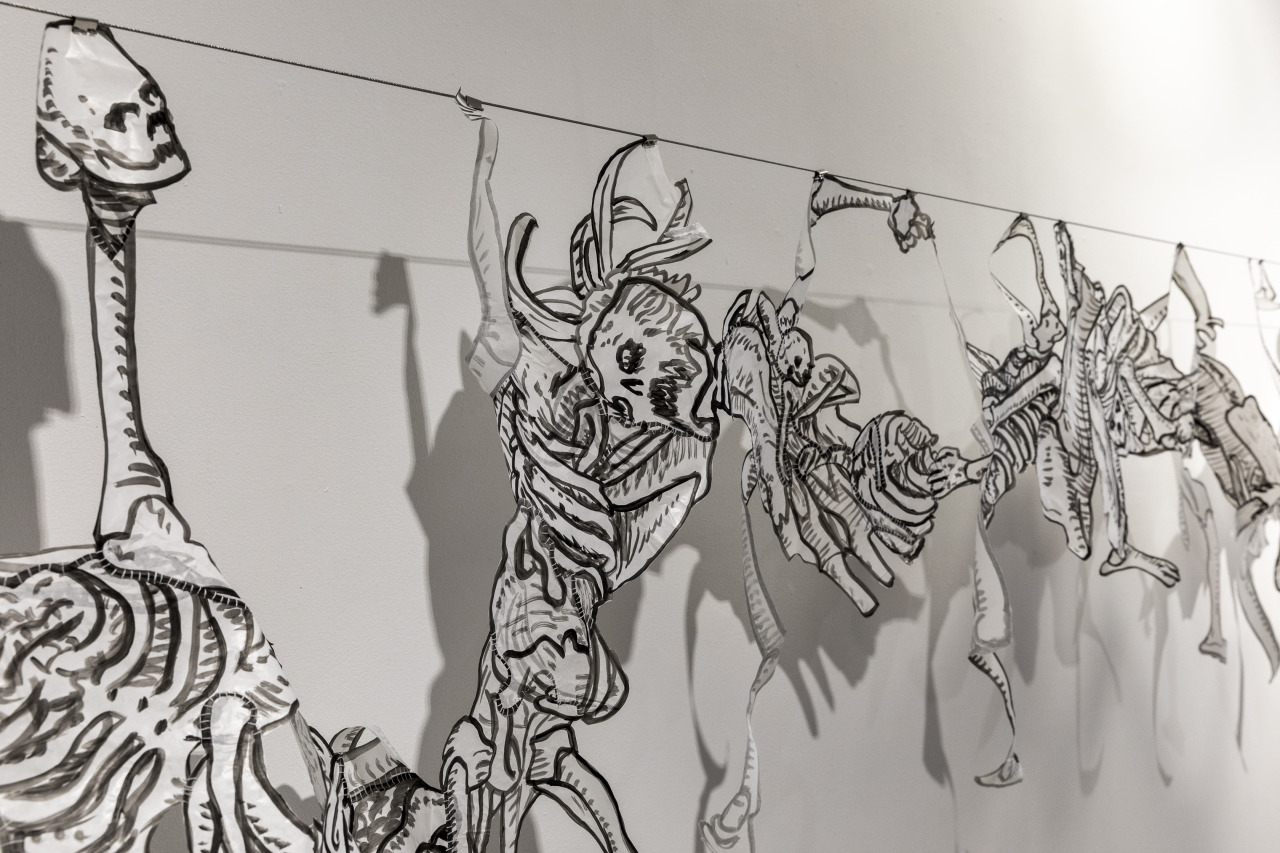
The exhibition in Oslo was prepared under the conditions of the pandemic. I could not travel to install it myself, and the works were sent in small boxes. This distance became part of the project. The exhibition itself turned into an act of transmission, trust, and care from afar — a fragile shelter assembled for the dead in another country, through the hands of others.
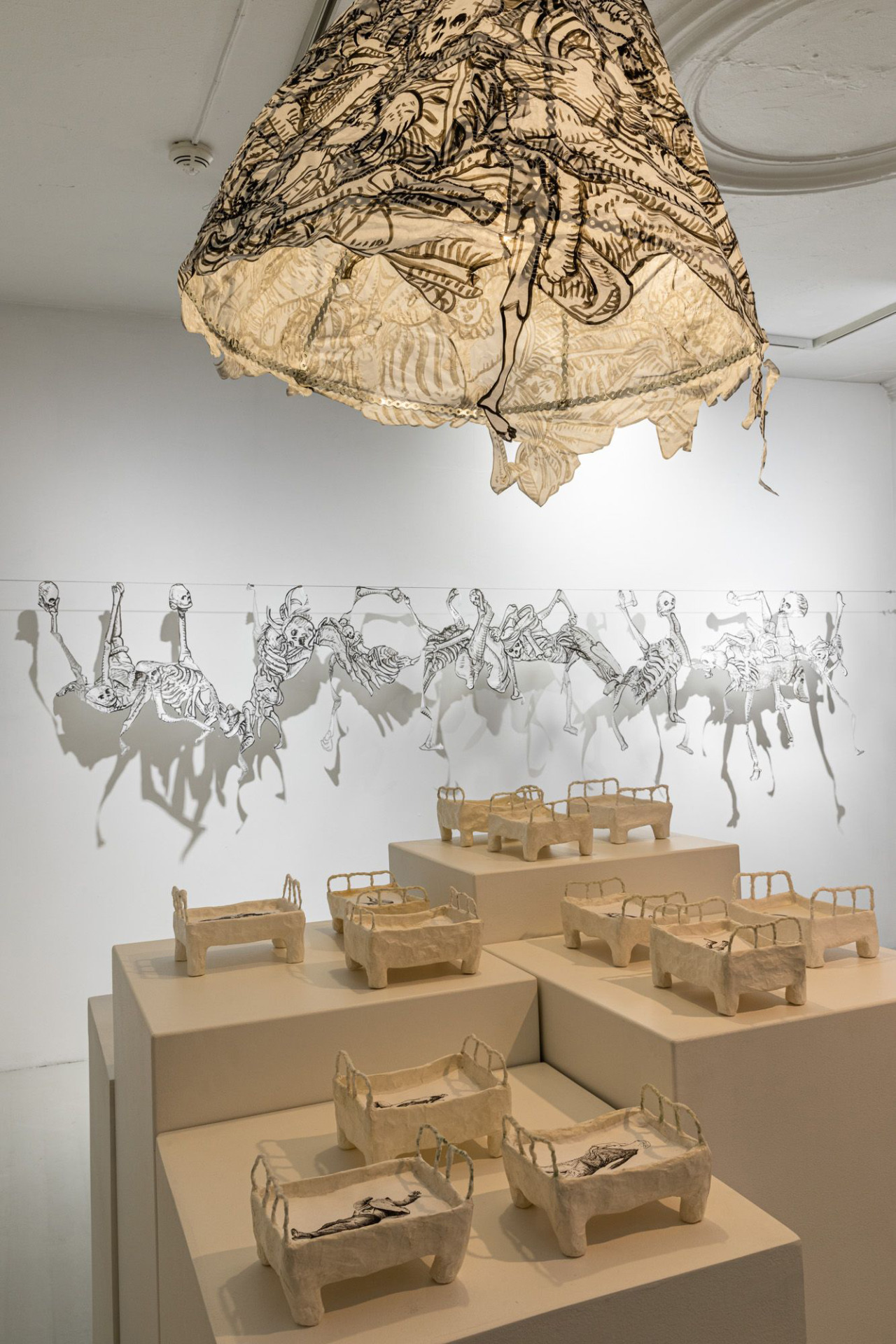
At its core, Dead Care asks what kind of care can still be offered after death. What can be done for those who were not buried, not named, not mourned, or later used by political narratives? The project does not propose a final memorial. It creates a temporary, vulnerable space where the dead are approached not as material for history, but as beings who still require attention, tenderness, and rest.
Related exhibitions
The Politics of Fragility / «Политика хрупкости». Group exhibition, curated by Boris Klyushnikov, Gallery Na Shabolovke, Moscow, Russia, 26 October – 11 December 2016.
Easy / «Легко», project VZLET. Solo exhibition, curated by Sergey Popov, VDNH, Pavilion Cosmos, Moscow, Russia, 5 December 2018 – 8 January 2019.
Dead Care. Solo exhibition, curated by Glafira Severianova, BOA / Billedkunstnerne i Oslo og Akershus, Oslo, Norway, 2020.
Related texts
«Анастасия Вепрева: Я последовательно уничтожаю военные машины». Искусство, 2018. https://iskusstvo-info.ru/anastasiya-vepreva-ya-posledovatelno-unichtozhayu-voennye-mashiny/
«Наша реальность — это миллионы неопознанных тел». Интервью с Анастасией Вепревой о выставке «Легко». ArtTube, 2018. Архивная копия / PDF.
Софронов, Егор. «Конечно, всё это про слабость». Aroundart, 21 декабря 2018. http://aroundart.org/2018/12/21/vepreva-vzlyot-slabost/
Соколов, Григорий. «Обретение нежности». К.Р.А.П.И.В.А., 4 января 2019. Рецензия на выставку Анастасии Вепревой «Легко», проект «ВЗЛЁТ», ВДНХ, Москва. Архивная копия / PDF.
“Sånn at de endelig kan få hvile” Journalen / OsloMet, 3 Nov 2020. https://journalen.oslomet.no/nb/2020/10/sann-at-de-endelig-kan-fa-hvile
Publication
Vepreva Anastasia. Легко / Easy. Exhibition book published on the occasion of the solo exhibition "Easy", project «ВЗЛЁТ». Moscow, 2019. Download PDF
Related interview
Artist Anastasia Vepreva on collecting rejection letters and the distinguished history of failure. Calvert journal, 2020. https://vimeo.com/424101996