Enchantment-93 / Очарование-93
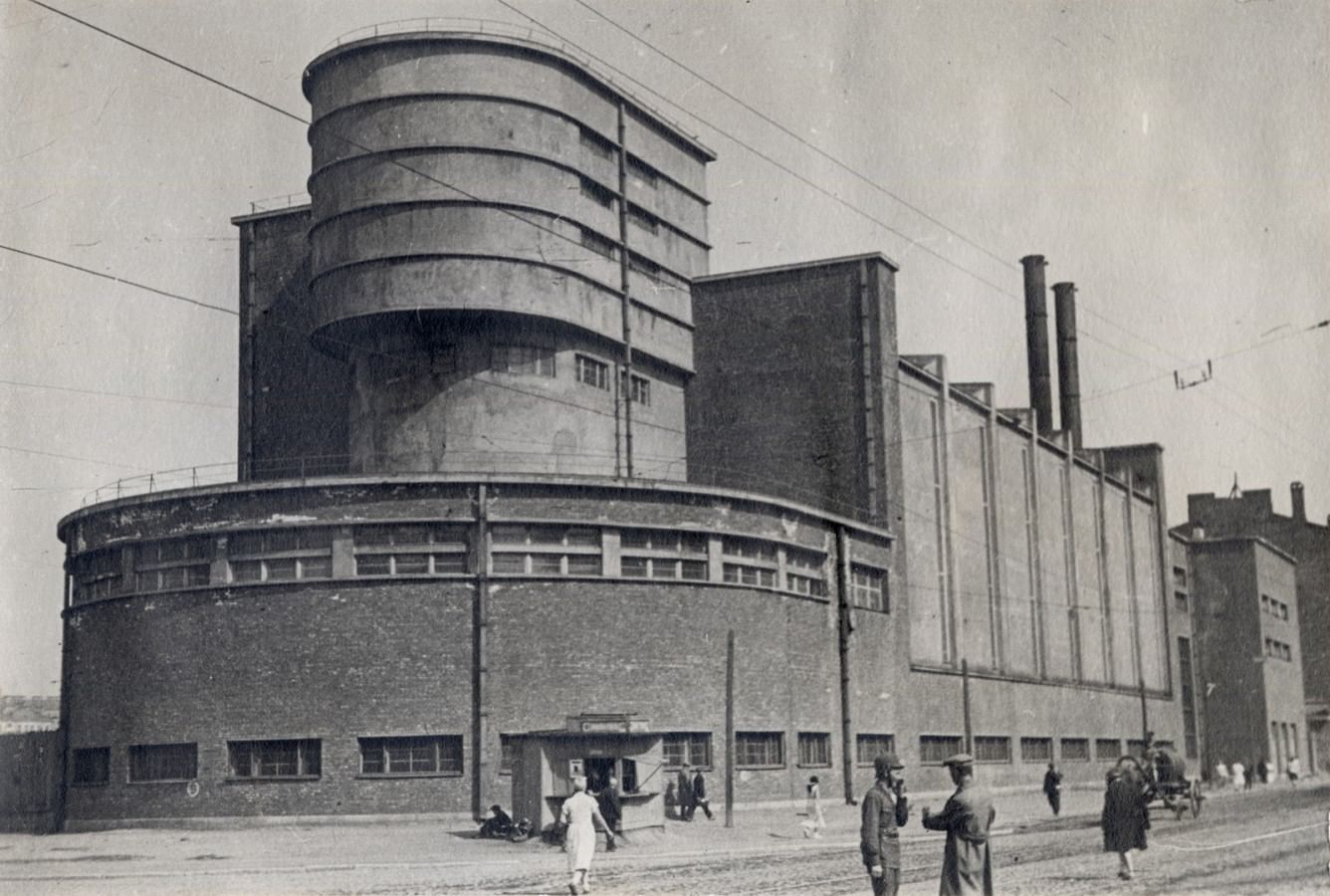
The Red banner factory (Фабрика "Красное Знамя"), situated in St. Petersburg, Russia, was a plant that lay at the core of its neighborhood, as well as one of the largest production facilities in Soviet light industry. In the 1980s, it employed 11–12 thousand people at a time when most places rarely had more than 3 thousand. The factory hosted a complete production cycle, from raw materials to ready-to-wear knits and jerseys. By the end of the decade, it was being modernized. However, in the 1990s the factory’s business gradually fizzled out and quietly disappeared, as if it had never existed.
Part one
This case prompted me to embark on a large research project in the spirit of public history (“Dig where you stand”), which I began in 2018, breaking it up into several stages. During the first preliminary stage, I gathered data that was readily available. It turned out that there were very few resources on the period of interest, a lot had been lost, and some things were floating around on the internet and hard to verify. Given this information deficit, I decided to zero in on the link between Rosa’s House of Culture and the Red Banner House of Culture, geographically adjacent but temporally spread out, and talk about the figure of the amateur artist, the part-time artist, whose figure is always fading into cliché and seems not worth discussing.
Rosa’s House of Culture — a project by the collective Chto Delat' — was an informal, semi-underground cultural center located on the grounds of the former Red Banner factory. I worked there for an extended period as curator and manager, which gave me a direct and sustained connection to the site, its social environment, and its layered institutional history.
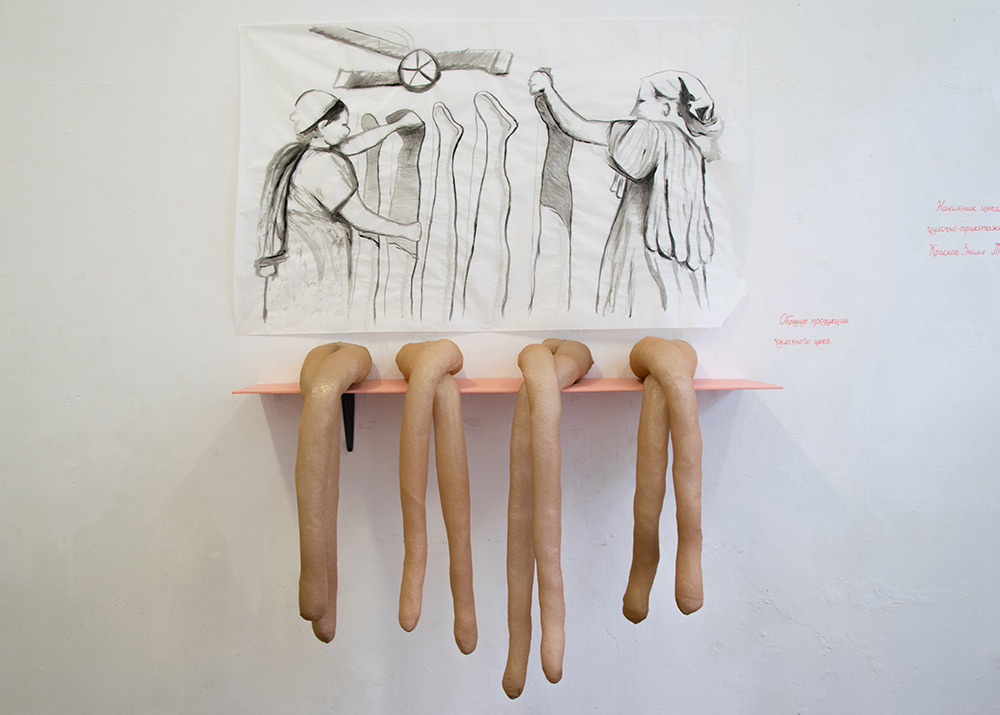
I decided to do a reconstruction of one amateur show at the House of Culture, adjusted for the fact that it never happened, or more precisely, I was unable to find any documents to that end, which, of course, does not mean that such a show was theoretically impossible. On the other hand, reconstruction as a method allowed me to legitimate amateur art as important and worthy of a museum exhibition. Objects and documents were rendered as responses to artefacts found on the vast expanse of the internet. The exhibition culminated in the publication of the text “Speculative Artistic Amateur/Self-Activity” in the exhibition catalogue, where I acted as a critic of my own project, in which I was already both the artist and the curator (and a viewer, too), thus taking the unique character of amateurism (and precarity), where one person always does everything, to the point of absurdity.
Part two
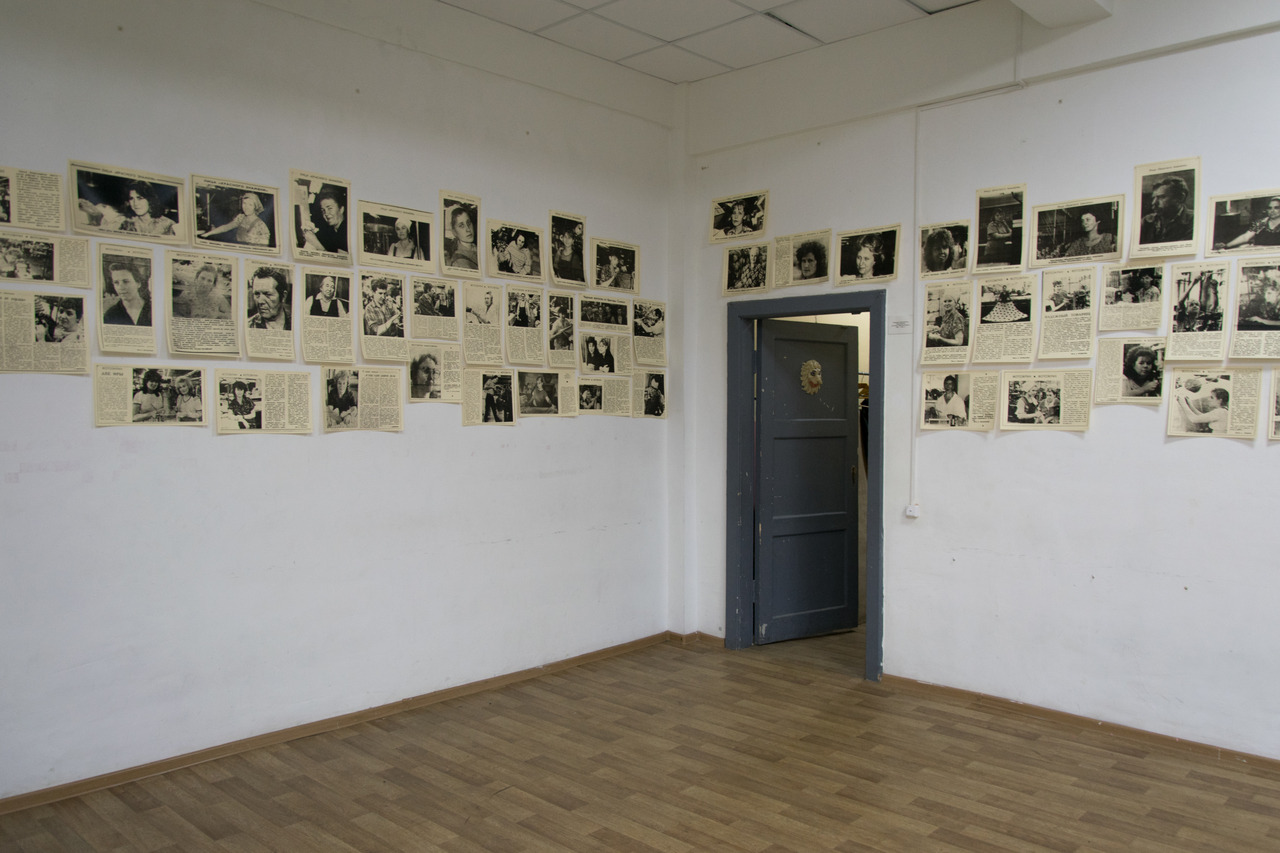
The next stage became possible in the spring of 2019. It was then that I was joined by two historians, Marina Zubkova and Vasily Borovoy, and we set research goals together that would allow us to get closer to the post-Soviet history of the factory and figure out what had happened then — was the factory’s closure part of the general global crisis of light industry; was it a fatal defeat of the Soviet fashion industry; or was the quiet death of the factory actually determined by its being coded as “feminine.” Together we were able to piece together a picture of the factory’s output and analyze the large print run of the factory’s newspaper, which unexpectedly turned out to be very interesting — in the late 80s and early 90s the makeup of its editorial board fluctuated and so, correspondingly, did the tone of the articles. The newspaper also published photographs of the women and men who worked at the factory, which we later used to make a large portrait installation. Here we focused less on art than on the production of knowledge, which is why we were immediately confronted with the question of how to make the information we collected more accessible to viewers. Out of this came the website (currently blocked), where we started to collect resources — lectures, guided tours, and other writings that would allow everyone to learn a little bit more about the factory in the post-Soviet period. The research also resulted in a historical exhibition presenting discovered artefacts and products of the factory.
Here you can download two articles in Russian: Vasily Borovoy, The Faded Red Banner: Soviet Glory and the Post-Soviet Fate of a Legendary Factory (Download PDF), and Anastasia Vepreva, Contemporary Art after Production: The History of Exhibitions at the Red Banner Factory (Download PDF).
Final part
The third stage was the production of a feature-length experimental film.
At this stage, our team expanded to include costume artists Sergey Illarionov and Ruslan Rychagov. We gained access to an abandoned and ungentrified section of the factory and decided to inhabit it once again with workers. In the narrative, a former employee returns to the factory in order to meet the ghosts of the past and to relive the trauma of shattered hopes. The factory newspaper became the main source for the script: we drew from it not only direct speech taken from interviews with workers, but also their photographs, through which their images could be reconstructed once again.
The film exists as a three-channel installation. On the main screen, we move through the factory alongside the protagonist, played by the researcher Marina Zubkova, observing her as if within a computer game. The second channel presents repetitive, monotonous movements of factory objects, accompanying long and aurally demanding monologues by workers, while also referring to the therapeutic method of EMDR used in trauma processing. The third screen is available only in the installation format: through surveillance cameras, viewers can see from the very beginning what is actually taking place in the factory during these encounters.
Composer Anton Komandirov also developed a unique soundscape for all of the factory spaces, which can be experienced separately as an independent album (listen online).
Watch full version "Entchantment-93" on Youtube
Working group
Marusya Baturina, Nikita Sungatov, Nikita Safonov, Oksana Zamoiskaya, Olesya Panova, Nadezhda Kalyamina, Alexander Verevkin, Marina Zubkova, Roman Osminkin, Sergei Illarionov, Ruslan Rychagov, Irina Kudryavinskaya, Ekaterina Shelganova, Anton Komandirov, Anastasia Vepreva, Andrey Nesteruk.
Video, a three-channel video installation,
42:22, 2020
Reviews in Russian
Роман Осминкин, «Очарование-93: постсоветская история на примере одной ткацкой фабрики», Артгид. https://artguide.ru/posts/2118
Ангелина Бурлюк, Алексей Артамонов, Лика Карева, Ярослав Алешин, Мария Сарычева, «Вокруг “Очарования-93”», Aroundart, 31 октября 2020 года. https://aroundart.org/2020/10/31/vokrug-ocharovaniya-93/